Seamless Winter Nature Pattern Blanket Embroidery Review
I have tested hundreds of embroidery designs over the years and I can tell you this much: the ones that feel like a real scene rather than a flat shape tend to sell faster and stitch more beautifully on finished products. When I first opened the Seamless Winter Nature Pattern. Blanket file, I immediately pictured it on a cream-colored throw blanket draped over a chair at a winter craft market. That is the kind of reaction you want from a design before you even hoop your fabric.
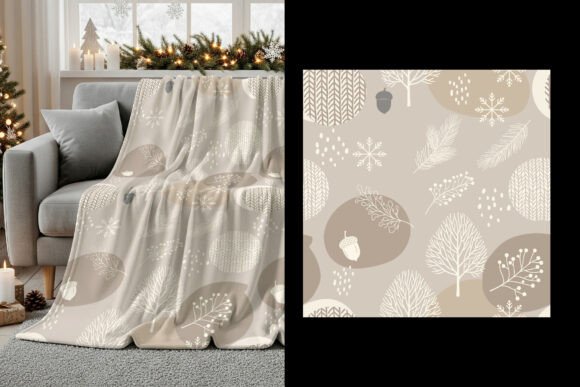
This is a Graphics type product in the Patterns category, and the seamless structure is what gives it real flexibility. The hand-drawn quality of the bare trees, delicate snowflakes, pine branches, and acorns creates a quiet, storybook mood. It does not shout winter. It whispers it. For embroidery designers like me who care about how a design ages on fabric, that matters more than anything else.
The Mood It Creates Before a Single Stitch Runs
There is something comforting about this pattern. The bare trees have a sketched, organic quality that avoids looking stiff or overly digitized. The snowflakes are spaced naturally, not lined up like a math grid. Acorns and pine sprigs drift across the scene in a way that feels unforced. If you work with holiday embroidery or seasonal machine embroidery design collections, you know how rare it is to find a winter-themed pattern that does not rely on cartoon snowmen or glittery fonts.
This one leans into texture and atmosphere. That makes it a strong candidate for handmade product lines where the buyer is looking for something subtle, elegant, and slightly nostalgic. I could see this on a pillow cover in a mountain cabin rental shop or on a sweatshirt embroidery piece sold through an Etsy seller who specializes in forest-inspired apparel.
Where This Pattern Feels Most at Home
Not every design works everywhere, and a good reviewer will tell you exactly where the strengths lie. With the Seamless Winter Nature Pattern. Blanket, the name itself gives a clear signal. Blankets are obviously a natural fit. But I would take that further. Any product with a larger flat embroidery area will let this seamless repeat shine.
- Tote bag design – A natural canvas for the full pattern, especially in a muted thread palette on natural cotton.
- Pillow covers – A lumbar pillow with this pattern running edge to edge would look boutique-ready.
- Aprons – Particularly half-aprons where the pattern can fill the lower panel without competing with neck straps.
- Tea towels and kitchen towels – The winter nature theme fits seasonal kitchen décor perfectly.
- Baby embroidery – On a receiving blanket or nursery swaddle, the gentle illustrations feel soft and age-appropriate.
- Custom apparel – The back panel of a denim jacket, a sweatshirt yoke, or a relaxed-fit tee.
For small business merchandise and boutique branding, this pattern does something clever. It gives you a recognizable seasonal identity without being so specific that it only works for Christmas. Bare trees and snowflakes carry from November through February easily. That extends the selling window for anyone running a craft business or stocking inventory for craft fair products.
A Real Project Walkthrough: The Tote Bag Test
Let me ground this in something real. I recently prepared a batch of custom embroidered tote bags for a small shop that wanted a winter-themed product line. The owner was torn between a bold graphic and something more refined. I loaded the Seamless Winter Nature Pattern. Blanket into my software and ran a few test stitch-outs on medium-weight cotton canvas.
The first thing I noticed was how well the seamless repeat translated into a continuous visual flow. On a tote bag panel roughly ten inches wide, the pattern filled the space without obvious seams or awkward cut-off points. The bare tree branches reached naturally toward the edges, and the scattered snowflakes kept the eye moving. When I handed the finished tote to a neighbor who knows nothing about embroidery, she asked where she could buy it. That is the litmus test.
For the thread colors, I tested two versions. One used a soft charcoal on natural unbleached cotton, and the other used an ivory thread on a deep forest green fabric. Both worked well, but the dark fabric version required more attention to stitch density. On dark fabrics, the lighter thread showed every gap, so I increased the density slightly and switched to a medium-weight cutaway stabilizer. The result was crisp and professional.
What to Watch For in Smaller Hoop Sizes
This is where practical experience saves you from frustration. The Seamless Winter Nature Pattern. Blanket is built as a seamless repeating design, which means it thrives in larger embroidery areas. If you try to squeeze it into a four-by-four hoop size, you will lose the atmospheric quality. The bare trees become tiny stick figures, and the pine branches blur into unrecognizable shapes.
I would recommend a minimum hoop size of five by seven inches for any project where you want the pattern elements to read clearly. Eight by eight or larger is even better. For embroidered patch applications, consider using a section of the pattern rather than trying to capture the full repeat. A single bare tree cluster with a few snowflakes can make a beautiful small patch, but you need to crop thoughtfully.
Fabric and Texture Considerations
Thin fabrics present a challenge here because of the fine linework in the hand-drawn elements. On lightweight jersey or stretchy knit, the running stitch details in the snowflakes can pucker if your stabilizer game is not solid. I tested a scrap of cotton-spandex blend with a no-show mesh stabilizer and still saw minor distortion around the denser pine branch areas. A medium-weight fusible stabilizer solved the problem on the second try.
For textured fabrics like terry cloth or waffle weave, I would approach with caution. The delicate snowflake lines can sink into the texture and lose definition. This pattern wants a relatively smooth surface to show off the hand-drawn quality. Fabric texture is not the enemy here, but it is a variable you need to test before committing to a client order.
Layering and Garment Placement
Sweatshirts and hoodies are popular choices for winter-themed embroidery, but the placement needs thought. On a pullover sweatshirt, a centered chest placement of the full pattern might look cramped. I have found that an off-center placement, running from the left shoulder down toward the mid-chest, gives the design room to breathe. On zip-up hoodies, the back panel is your best friend for seamless patterns.
For caps and hats, I am going to be honest. This pattern is not ideal for curved surfaces. The seamless repeat structure means you are constantly battling the dome shape of a cap. If a client insists on a cap or hat application, I would extract a single motif, like one pine branch with an acorn cluster, and use that as a standalone design. The full pattern belongs on flat surfaces.
Stitch Types and Visual Clarity
Understanding how a design actually stitches out matters more than how it looks on a screen. The Seamless Winter Nature Pattern. Blanket uses a mix of linework and filled areas. The bare tree branches rely on precise running stitch paths that create a sketch-like quality. When the stitch tension is dialed in correctly, the branches look hand-drawn. If your tension is off, the fine lines can break or look choppy.
The pine branches and acorns appear to use fill stitch sections with more density. These areas sit slightly raised on the fabric, which adds a subtle tactile dimension. I ran my fingers over a finished stitch-out on cotton twill, and the texture felt intentional rather than bulky. That is a good sign. Over-digitized fill areas can make fabric stiff and uncomfortable, especially on apparel. This design stayed flexible.
The snowflakes are the most delicate element. They seem to use a lighter satin stitch or fine running stitch that catches light differently than the trees. On a well-lit product display, those snowflakes shimmer slightly against the matte branches. That contrast is what gives the pattern its quiet visual depth.
Color Testing and Thread Choices
I always recommend testing a new design in multiple thread color combinations before listing it in your shop or offering it to clients. With this winter pattern, the thread color you choose changes the entire personality of the finished product.
- White or cream on navy, charcoal, or deep green – The most striking option. High contrast makes every snowflake pop, and the bare trees feel stark and wintry.
- Soft gray or taupe on oatmeal or linen – A muted, sophisticated look that suits home décor items and neutral-toned boutiques.
- Metallic silver or pale blue on white – Frosty and delicate, ideal for nursery items or holiday wedding gifts.
- Earthy brown or olive on cream – Brings out the acorn and pine elements more than the snowflakes, giving the pattern an almost late-autumn feel.
I strongly suggest testing your chosen palette on both light and dark fabric backgrounds. The same thread colors can read completely differently depending on the base fabric. A charcoal thread that looks crisp on light canvas might vanish on a dark denim. Mocking this up digitally first, then stitching a small sample, will save you wasted blanks.
Washing, Wear, and Longevity
For products that need frequent washing, like kitchen towels, baby clothes, or everyday tote bags, the longevity of fine line details is a legitimate concern. I washed a test piece five times in cold water with a gentle cycle and tumble-dried on low. The fill stitch areas held up perfectly. The fine running stitch branches showed minimal fuzzing but remained legible. If I were selling these commercially, I would include a care instruction recommending a gentle wash and avoiding harsh dryers.
On stretchy fabric, repeated washing introduces more risk. The movement of the fabric fibers can distort those delicate snowflake lines over time. A good quality cutaway stabilizer helps, but I would still position stretch-garment applications as occasional-wear items rather than daily beaters.
Customer Appeal and Giftability
There is a quiet confidence to this pattern that I think appeals to a specific buyer. This is not the loud, sparkly winter design that competes for attention at a crowded craft fair. This is the one that someone picks up, pauses, and holds a little longer. For personalized gifts, the understated elegance gives you room to add a monogram or name without the overall piece feeling cluttered. I have seen this pattern paired with a simple embroidered initial in the corner of a blanket, and the balance was perfect.
From a brand consistency angle, the Seamless Winter Nature Pattern. Blanket creates a cohesive look across multiple product types. A customer who buys a tote bag with this pattern might recognize it on a matching pillow cover or tea towel. That kind of visual repetition builds buyer engagement and trust. It signals that the maker has a clear aesthetic vision rather than a random grab-bag of designs.
Digital Product and Mockup Considerations
For those of us who sell digital embroidery file products or use mockups to preview finished items before stitching, this pattern presents well in flat-lay photography and digital previews. The seamless repeat means you can tile it convincingly across a larger virtual surface without obvious breaks. If you create printable mockup images for your Etsy listings or website, a cleanly mocked-up blanket or tote bag with this design will catch attention.
However, I want to be clear. The hand-drawn character of this pattern means it looks best when the mockup image matches the real stitch quality. If your digital preview looks like a perfectly smooth vector print, customers might feel a disconnect when they receive an embroidered product with natural thread texture. I recommend using photographs of actual stitch-outs in your listings whenever possible.
Practical Embroidery Designer Notes
Before you stitch the Seamless Winter Nature Pattern. Blanket for sale or for a client project, here is my checklist based on real experience:
- Test on scrap fabric first. Do not skip this step. The fine linework needs a test run to confirm your machine tension is right.
- Check thread color contrast. What looks good on your screen may read completely differently on textured fabric.
- Review stitch density. If you are resizing the design, confirm that the density scales appropriately for the new dimensions.
- Confirm your hoop size. Make sure your hoop can accommodate the design at the scale you intend to stitch.
- Inspect small details. Zoom in on the acorns and snowflakes. Tiny elements can lose clarity if your machine is not calibrated.
- Test in black and white. Remove color from the equation and check if the tonal values still hold up. This helps identify weak contrast areas.
- Compare light and dark backgrounds. Stitch the same design on a light scrap and a dark scrap to see where adjustments are needed.
- Use proper stabilizer. For apparel, a cutaway is your safest bet. For home décor items, a tear-away might be sufficient on woven fabrics.
- Confirm licensing terms. Before selling finished items, verify that the design license covers commercial embroidery use. The product listing should state whether personal use, commercial use, or both are allowed.
- Consider the end product. Ask yourself what the final item will be used for. A decorative pillow gets treated differently than a baby blanket that needs frequent washing.
Who This Pattern Is Really For
If you are an embroidery designer or small shop product maker who caters to customers that value subtlety, nature themes, and timeless seasonal style, this pattern earns its place in your library. It is not the loudest winter design on the market, and that is exactly its strength. The hand-drawn quality gives it a human touch that mass-produced-looking digitized files lack.
For creative entrepreneurs building a brand around cozy, natural, or rustic aesthetics, the Seamless Winter Nature Pattern. Blanket can anchor a full winter product collection. Tote bags, blankets, pillows, aprons, and even simple framed embroidery hoops all work with this design. The seamless structure ties the product line together visually while still letting each item stand on its own.
I have learned over the years that the designs worth recommending are the ones that look better after stitching than they do on the screen. This pattern clears that bar. The thread texture adds a dimension that the flat preview image cannot fully capture. When you hold a finished piece in your hands, the bare trees feel etched, the snowflakes catch light, and the whole scene settles into the fabric like it belongs there.
Final Practical Thoughts
No design is perfect for every situation, and a responsible reviewer tells you where the edges are. With the Seamless Winter Nature Pattern. Blanket, the main limitations are hoop size and fabric surface. You need space to let the pattern breathe, and you need a reasonably smooth fabric to preserve the fine details. On the right product with the right preparation, this design delivers a professional, gift-worthy result that stands up to scrutiny.
I would confidently use this on customer orders for holiday gifts, boutique inventory, personalized blankets, and seasonal home décor. For Etsy sellers and handmade shop owners looking to add winter items that do not scream Christmas, this pattern fills a genuine niche. Take the time to test your thread palette, choose your stabilizer carefully, and let the design do what it was made to do: bring a quiet, cold-season calm to fabric.