Lavender Seamless Floral Patterns
First Impressions: Soft, Botanical, and Quietly Confident
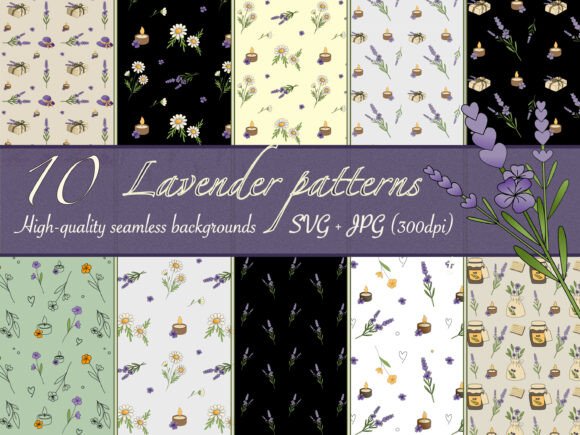
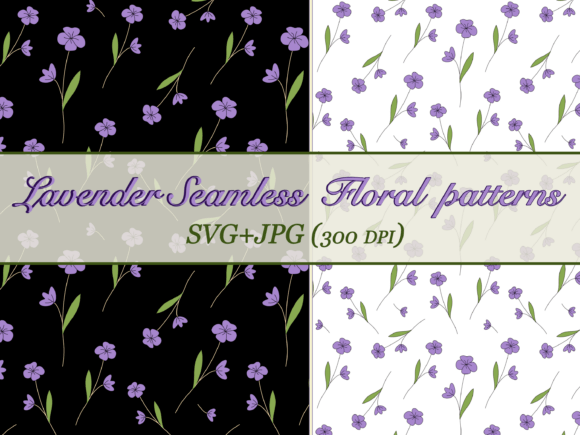
Opening Lavender Seamless Floral Patterns feels like stepping into a sun-dappled meadow at dawn—delicate, grounded, and full of quiet intention. These aren’t bold, high-contrast motifs shouting for attention. Instead, they offer two elegant repeating designs built around soft purple lavender blooms, fine stems, and subtle botanical accents. The “seamless” part isn’t just marketing speak—it’s immediately visible in how the repeats flow without visual hiccups, making them ideal for borders, all-over fabric coverage, or continuous embroidery runs on items like tea towels or pillow covers.
As a designer who regularly selects patterns for client embroidery projects—from boutique aprons to personalized baby blankets—I appreciate how this collection avoids overcomplication. There’s no aggressive density, no fussy micro-details that vanish under satin stitch, and no awkward spacing that breaks rhythm on curved surfaces. It reads as *designed*, not assembled.
A Real Project Test: Embroidering a Linen Tote Bag for a Local Gift Shop
Last week, I prepped a custom order: 12 linen tote bags for a small-town gift shop launching a spring botanical line. Their brief? “Elegant but approachable. Not too precious—people should actually use these daily.” I chose the lighter of the two Lavender Seamless Floral Patterns for a subtle side border (about 3" tall × 18" wide), stitched in tonal lavender and sage thread on natural unbleached linen.
The result? Calm, cohesive, and unmistakably handmade—without looking fragile. Customers responded to the softness, not the intricacy. One returned asking if we offered matching tea towels (we did—and the same pattern scaled up worked beautifully). That tells me Lavender Seamless Floral Patterns supports brand continuity across product types, which matters deeply to craft businesses building recognizable identities.
Where It Shines—and Where to Pause
Lavender Seamless Floral Patterns excels in medium-to-large surface embroidery: sweatshirt cuffs, pillow cover hems, apron pockets, baby blanket corners, and embroidered patches meant for denim jackets or canvas backpacks. Its gentle scale and open layout translate well to fill stitch and running stitch variations—no overcrowding, no thread nesting, even at moderate stitch density.
It also works thoughtfully for holiday embroidery and wedding gifts: think lavender-toned napkins for a garden ceremony or monogrammed kitchen towels for a bridal shower. The botanical theme feels timeless—not trendy—so it won’t date quickly in an Etsy shop or craft fair lineup.
That said, proceed with care on:
- Small hoop sizes (under 4"): The repeat integrity holds, but fine stem details may blur unless digitized with extra clarity—check your embroidery file’s smallest elements before stitching.
- Stretchy or thin fabrics (like lightweight knits or rayon challis): Use cutaway stabilizer generously, and consider reducing stitch density slightly to avoid puckering.
- Dark or textured fabrics: Lavender thread on charcoal linen or heavy terry cloth can mute contrast. Test thread colors on scrap first—or lean into tonal layering (e.g., pale lilac over deep plum) for depth instead of contrast.
- Curved surfaces (caps, curved pillow edges): The seamless flow helps, but test placement on a mockup. Some repeats read more naturally when aligned vertically versus diagonally.
What It Adds to Your Finished Product—Beyond Pretty
This isn’t just decoration. Lavender Seamless Floral Patterns elevates perceived value without demanding premium pricing. Handmade products using it feel considered—not generic. Customers notice the cohesion, the restraint, the way the design breathes with the fabric rather than fighting it.
For Etsy sellers and small shop owners, that translates directly to trust: consistent, calm visuals support storytelling (“slow living,” “botanical simplicity,” “mindful gifting”). It also strengthens buyer engagement—shoppers linger longer on listings where the embroidery looks intentional, not slapped-on. And because the motif is versatile across apparel, home goods, and accessories, it becomes a reliable design asset—not a one-off.
Practical Designer Notes Before You Stitch
Before committing to a production run or listing a finished product:
- Test the embroidery file on scrap fabric matching your final substrate—linen, cotton duck, terry, or knit—as behavior varies wildly.
- Check thread color contrast in both natural and artificial light; lavender tones shift easily.
- Review stitch density: if your machine struggles with dense fills, simplify background areas manually or ask your digitizer to optimize.
- Confirm hoop size compatibility—especially if planning multi-position repeats on large items like duvet covers or table runners.
- Inspect small details (petal tips, stem junctions) at actual stitch-out size. What looks crisp on screen may soften in thread.
- Try a black-and-white printable mockup first—this reveals rhythm, balance, and visual weight faster than color.
- Use appropriate stabilizer: tear-away for stable wovens, cutaway for knits or lightweight fabrics, and topping for napped or textured surfaces.
- Verify licensing terms before selling finished items or bundling Lavender Seamless Floral Patterns into digital product kits—commercial use rights vary by seller.
Final Thought: A Pattern That Supports Your Process
Lavender Seamless Floral Patterns doesn’t try to be everything. It’s not a statement monogram, a flashy applique design, or a dense filler for logos. It’s a thoughtful, repeatable, quietly confident tool—ideal for designers who value cohesion over clutter and longevity over trend-chasing.
Whether you’re embroidering a single personalized gift or scaling production for a craft business, this set earns its place in your library of trusted design assets. It performs cleanly, photographs well, and invites customers to slow down—not just look, but *feel*. And in today’s handmade market, that kind of resonance is rare, valuable, and worth stitching carefully.